
Winter Weather and Your Weight
Winter Weather and Your Weight
Small weight fluctuations are normal throughout the year, often related to the weather, activity levels, and diet changes that occur with regular seasonal changes. However, people tend to struggle with weight gain most often in the winter. There are several reasons for this.
1. Exposure to cold weather can increase your appetite, with your body’s temperature regulation system needing additional calories and energy to maintain a healthy body temperature (Deem et al., 2020). Both brain functions and hormonal systems change when the weather gets cold, telling your appetite to increase and eat more. Certain brain cells are quickly activated when the body is exposed to the cold, telling you to eat more to maintain a normal body temperature. Similarly, hunger hormones are also rapidly activated by the cold—often starting between 35 and 42 degrees Fahrenheit—triggering an alert to your brain to conserve energy and increase appetite. Other studies show that cold exposure can also change food preferences, leading to cravings for warmer, higher-fat-containing foods (Lal et al, 2023).
2. Physical activity tends to trend down in the cold winter months. Data shows that daily step counts are anywhere from 10 to 15% lower in the winter when compared to the summer (Deem et al., 2020). Additionally, sedentary behavior, or periods of inactivity, are roughly 30 minutes longer per day in the winter season when compared to the summer (Ferguson et al., 2021).
3. With several major US holidays occurring during the winter months in the northern hemisphere, something called “festive-period intake” increases. Most commonly occurring in late November through early January, festive-period intake refers to an increase in food and alcohol consumption during the holiday/festive season that often leads to two concerns: weight gain and alcohol-related medical conditions. Furthermore, with an average weight gain of 0.88 to 1.98 pounds during this 6-week time period, this can equate to a total weight gain of 15 to 30 pounds over a period of many years just due to festive-period intake alone (Maher et al., 2023).
4. Finally, another prominent reason for weight gain during the cold winter months occurs with winter-pattern seasonal affective disorder (SAD). Fewer hours of daylight, decreased physical activity levels, longer sleeping times, and increased appetite can all cause weight gain in someone experiencing SAD. Unlike the reduced appetite and weight loss often seen with classic depression, SAD is unique in that it produces the reverse metabolic shift, increasing cravings for carbohydrate-heavy foods, increasing appetite, and increasing sleep time. All of this results in increased weight and added adipose tissue, which can amplify depression further and lead to even further weight gain (Öztürk & Aydemir, 2026).
What You Can Do During This High-Risk Time for Weight Gain
There are many other reasons for weight gain during the winter months, including comorbid medical conditions, mental health disorders, systemic disease, socioeconomic challenges, and more that must be evaluated and reviewed with a trained medical provider. However, in otherwise well and able adults, there are many ways to prevent weight gain and even lose weight during the winter seasons, despite these increased risks.
A focused physical exam, detailed lab work and diagnostic testing, and review of lifestyle factors is always step one in evaluating concerns for weight gain and/or trouble losing weight. Next, treatment options should be reviewed and can include anything from weight loss medications, light therapy, lifestyle changes, alcohol abuse treatment, mental health care and management, nutritional plans and focus on diet, planning ahead for seasonal/festive changes, and maintaining an accountable plan with a licensed health care professional.
A list of resources we use to assist with weight maintenance or weight loss during the winter months includes:
- MyFitFoods
- Peloton
- The Alcohol Experiment
- Mayo Clinic Diet
- Soto Method
- CorePower
- Mayo Clinic Cognitive Behavioral Therapy for Insomnia
- Everyday Health
Join our 6-week challenge to keep each other accountable and on track during this high-risk window for weight gain.
Or try other ways to stay accountable during this time:- Join me for office hours once a week to talk about diet, exercise, events, etc. here.
- The best option? Sign up to become a member at Dala Health and we’ll be with you every step of the way, no matter the season.
References
- References
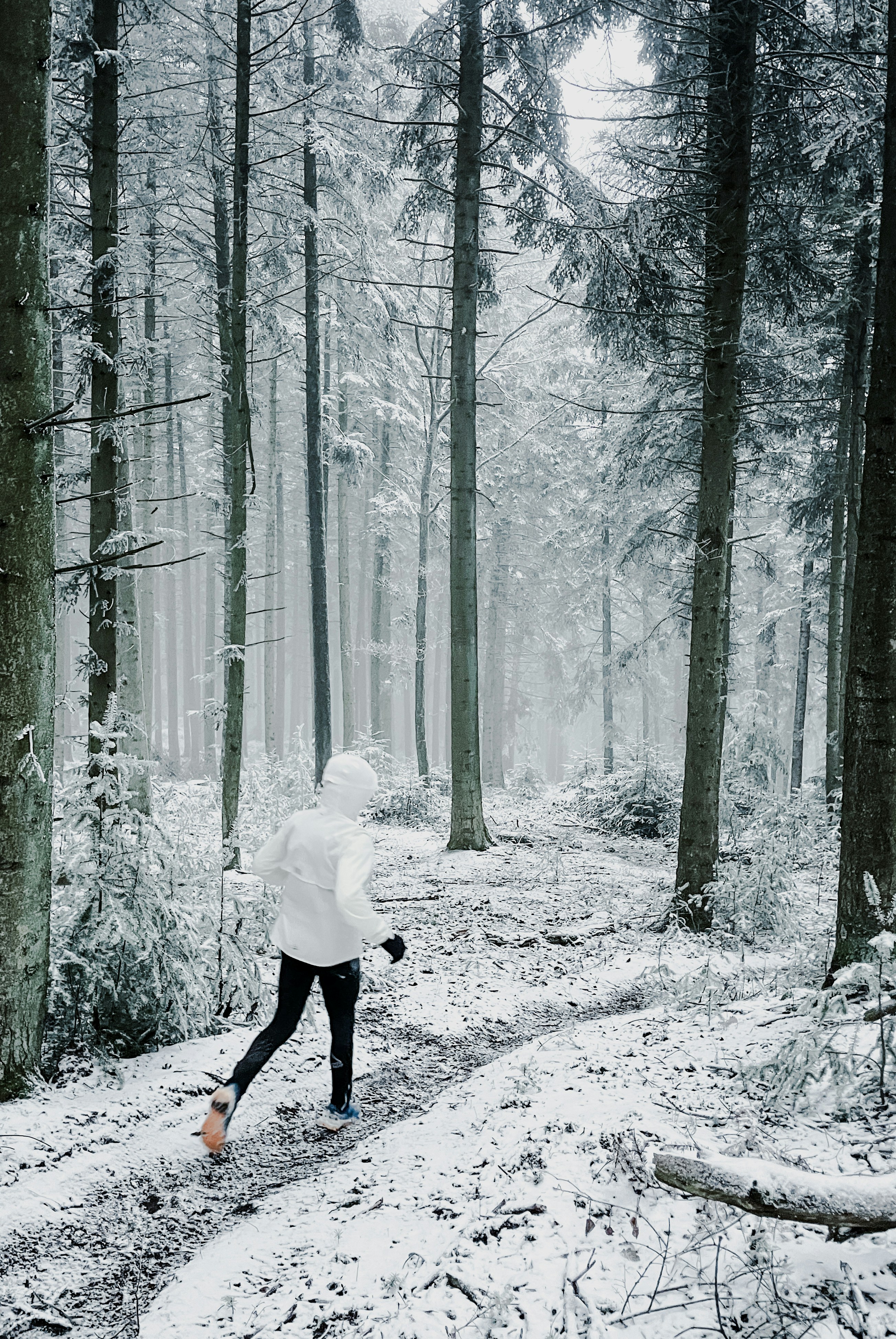
- Bessat, K. (2024, January 9). A person walking in the snow through a forest [Photograph]. Unsplash. https://unsplash.com/photos/a-person-walking-in-the-snow-through-a-forest-uZgrr_l_umo
- Celis-Morales, C., Lyall, D. M., Welsh, P., Anderson, J., Steell, L., Guo, Y., Maldonado, R., Mackay, D. F., Pell, J. P., Sattar, N., & Gill, J. M. R. (2020). Habitual sleep duration and risk of incident ischemic heart disease, heart failure and stroke: A cohort study of 404,044 UK Biobank participants. International Journal of Obesity, 44(8), 1781–1789. https://doi.org/10.1038/s41366-020-0562-2
- Deem, J. D., Faber, C. L., Pedersen, C., Phan, B. A., Larsen, S. A., Ogimoto, K., Nelson, J. T., Damian, V., Tran, M. A., Palmiter, R. D., Kaiyala, K. J., Scarlett, J. M., Bruchas, M. R., Schwartz, M. W., & Morton, G. J. (2020). Cold-induced hyperphagia requires AgRP neuron activation in mice. eLife, 9, Article e58764. https://doi.org/10.7554/eLife.58764
- Ferguson, T., Curtis, R., Fraysse, F., Lagiseti, R., Northcott, C., Virgara, R., Watson, A., & Maher, C. A. (2021). Annual, seasonal, cultural and vacation patterns in sleep, sedentary behaviour and physical activity: A systematic review and meta-analysis. BMC Public Health, 21, Article 1384. https://doi.org/10.1186/s12889-021-11298-3
- Lal, N. K., Le, P., Aggarwal, S., Zhang, A., Wang, Q., Dong, Y., Zhang, Z., & Chen, X. (2023). Xiphoid nucleus of the midline thalamus controls cold-induced food seeking. Nature, 621(7977), 138–145. https://doi.org/10.1038/s41586-023-06430-9
- Maher, C., Ferguson, T., Curtis, R., Brown, W., Dumuid, D., Fraysse, F., Hendrie, G. A., Singh, B., Esterman, A., & Olds, T. (2023). Weekly, seasonal, and festive period weight gain among Australian adults. JAMA Network Open, 6(7), Article e2326038. https://doi.org/10.1001/jamanetworkopen.2023.26038
- Öztürk, E. Ö., & Aydemir, Ö. (2026). Seasonal metabolic oscillation: Adiposity cycling as a candidate amplifier of mood seasonality in seasonal affective and bipolar disorders. Frontiers in Psychiatry, 17, Article 1921655. https://doi.org/10.3389/fpsyt.2026.1921655
- St-Onge, M.-P., & Mikic, A. (2019). Rapid eye movement sleep regulation of energy balance and body weight: Potential pathways and future directions. European Journal of Clinical Nutrition, 73(2), 278–282. https://doi.org/10.1038/s41430-019-0408-y